
Upholstery choice is one of the most consequential decisions in commercial restaurant furniture. The wrong material can mean high cleaning costs, early replacement and a worn-out look within two years. The right choice lasts five to eight years and looks better with age.
Why This Decision Matters More in Commercial Settings
A residential sofa might host a few hours of use per day. A restaurant booth seat can be occupied continuously from lunch through late dinner — enduring constant friction, spills, cleaning agents and body heat across hundreds of cycles per week.
Material that performs well at home often fails in commercial hospitality environments within 12–18 months. Understanding the practical differences helps buyers select the right material for their specific operation.
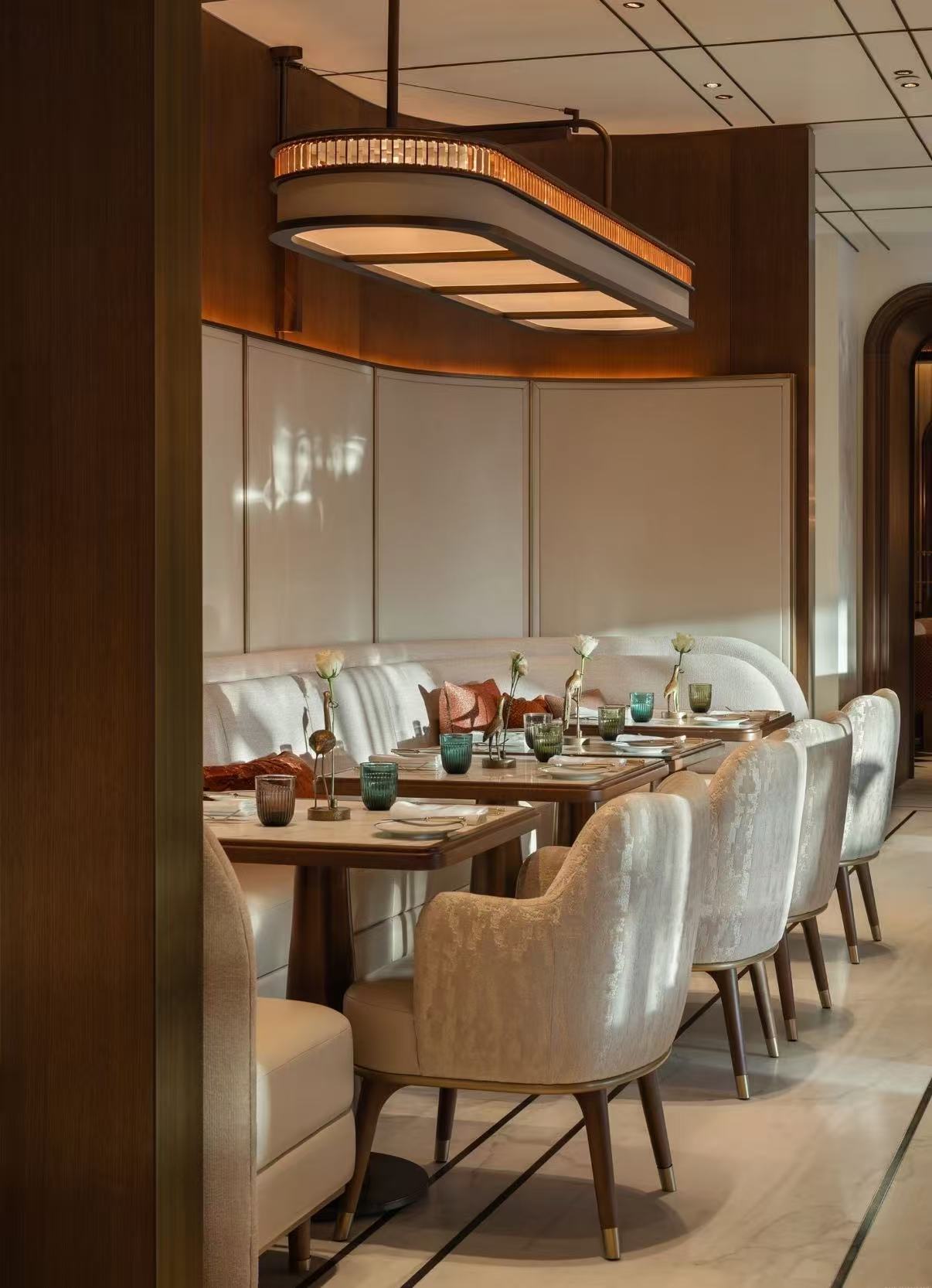
PU Leather: Strengths and Limitations
Strengths
- ✓ Easy to wipe clean — spills removed in seconds
- ✓ Resistant to liquid absorption
- ✓ Consistent colour across large batches
- ✓ Lower maintenance cost over time
- ✓ More hygienic for food service environments
Limitations
- ✗ Lower-grade PU can peel or crack within 2–3 years
- ✗ Less breathable — can feel warm in summer
- ✗ May look less premium than genuine leather or high-end fabric
- ✗ Quality varies significantly — confirm grade before ordering
Buyer Note on PU Leather Quality
Commercial-grade PU uses a thicker backing, higher abrasion-resistant coating and UV-stabilised pigments. Ask for the abrasion rating (Martindale cycles) and coating thickness before ordering. Standard commercial seating should reach at least 50,000 Martindale cycles.
Fabric: Strengths and Limitations
Strengths
- ✓ More breathable and comfortable in warm climates
- ✓ Higher perceived quality in premium dining settings
- ✓ Wide range of patterns and textures for design impact
- ✓ High-grade commercial fabric (100,000+ Martindale) is highly durable
Limitations
- ✗ Absorbs spills more readily — requires faster cleaning response
- ✗ Stain treatment is essential for food service use
- ✗ More complex to clean thoroughly
- ✗ Higher ongoing maintenance effort
Side-by-Side Comparison
| Criteria | PU Leather | Commercial Fabric |
|---|---|---|
| Cleanability | ★★★★★ | ★★★☆☆ |
| Durability (commercial) | ★★★★☆ | ★★★★★ |
| Comfort / Breathability | ★★★☆☆ | ★★★★★ |
| Visual Premium Feel | ★★★☆☆ | ★★★★★ |
| Maintenance Cost | Low | Medium |
| Best For | Casual dining, cafés, high-turnover restaurants | Fine dining, hotel lounges, premium café seating |
Our Recommendation by Venue Type
Casual Cafés & All-Day Dining
PU leather is the practical choice. Spills are frequent, cleaning must be fast. Commercial-grade PU with a thick coating will perform well for 4–6 years in this environment.
Mid-Range & Premium Restaurants
Both materials work — the choice depends on your aesthetic. Consider a combination: fabric booth backs with PU seat pads for practicality and visual warmth.
Hotel Lounges & Fine Dining
High-grade commercial fabric — velvet, boucle or performance weave — elevates perceived quality significantly. With proper treatment and regular cleaning, commercial fabric outperforms PU leather in premium hospitality environments.
Outdoor & Semi-Outdoor Spaces
For outdoor café terraces and covered garden areas, use outdoor-grade PU or solution-dyed acrylic fabric with UV and water resistance. Standard indoor materials will degrade rapidly outdoors.
Not Sure Which to Choose?
Tell us your venue type, climate, expected daily covers and budget. We'll recommend the right option — and send you physical samples before you confirm the order.
Request Material Samples